

Passive House U.S. (PHIUS)
Phius passive buildings minimize energy use, create healthy and comfortable living environments, and offer the best path to net zero.
Phius Certified buildings use 40-60% less energy overall, maintain consistent, comfortable temperatures, and are resilient in the face of power outages and severe weather events. This is achieved with the holistic incorporation of measures such as airtight building enclosures and continuous ventilation systems.
Simply put, it’s just a better way to build.
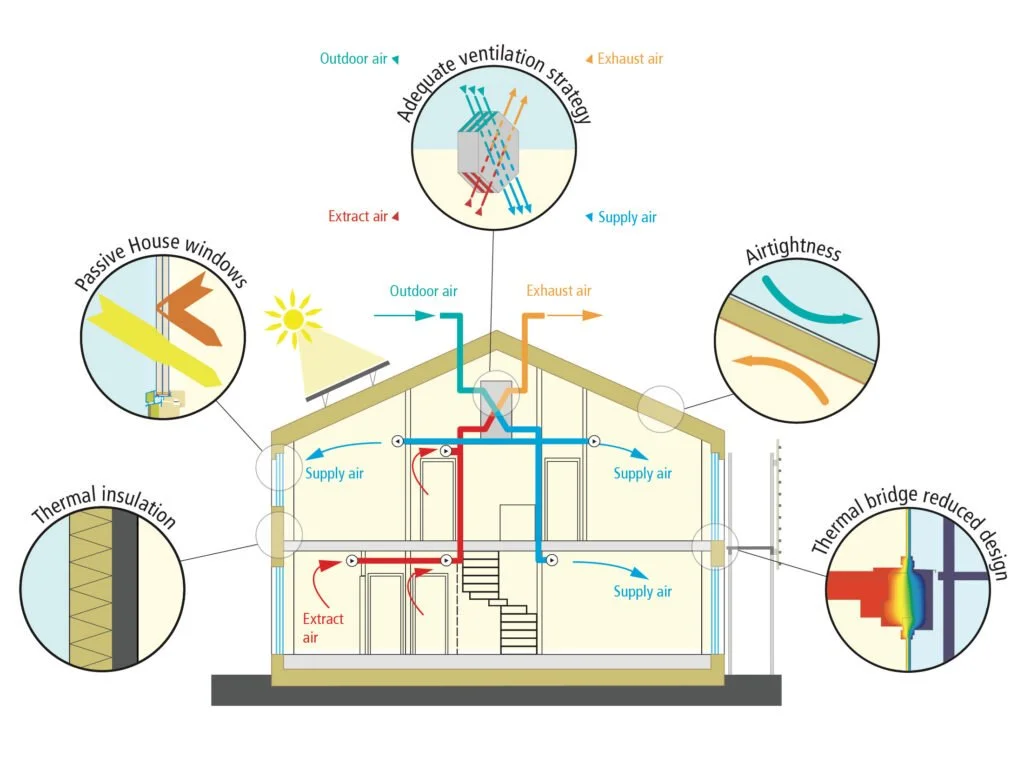
Diagram From The Passive House Standard Website Displaying The Main Principles Of Phi (Passive House Institute, 2015)
Passive Building Benefits
Comfortable – Balanced ventilation, airtight building envelope and continuous insulation create a quiet, comfortable living environment.
Affordable – Phius projects require minimal to no additional upfront costs, while guaranteeing substantial energy cost savings in the future.
Resilient – Phius buildings are proven to be more resilient in the event of natural disasters, such as extreme heat and cold events, power outages and wildfires.
Healthy – Phius requires all materials used inside to be low VOC and non-toxic with constant filtration of fresh air, resulting in a safe and quiet environment.
Durable – The holistic design of Phius buildings make them uniquely built for the long haul.
Quality Assured – All Phius Certified passive buildings go through a rigorous third-party quality control review to ensure the building will perform as designed.