

The Hidden Energy Drain
Your high R-value wall insulation might not be performing as well as you think. While you've invested in quality insulation materials, there's a silent energy thief at work: thermal bridging. This often-overlooked phenomenon can reduce your wall's insulation performance by up to 25%, turning your carefully planned energy-efficient design into a costly compromise.
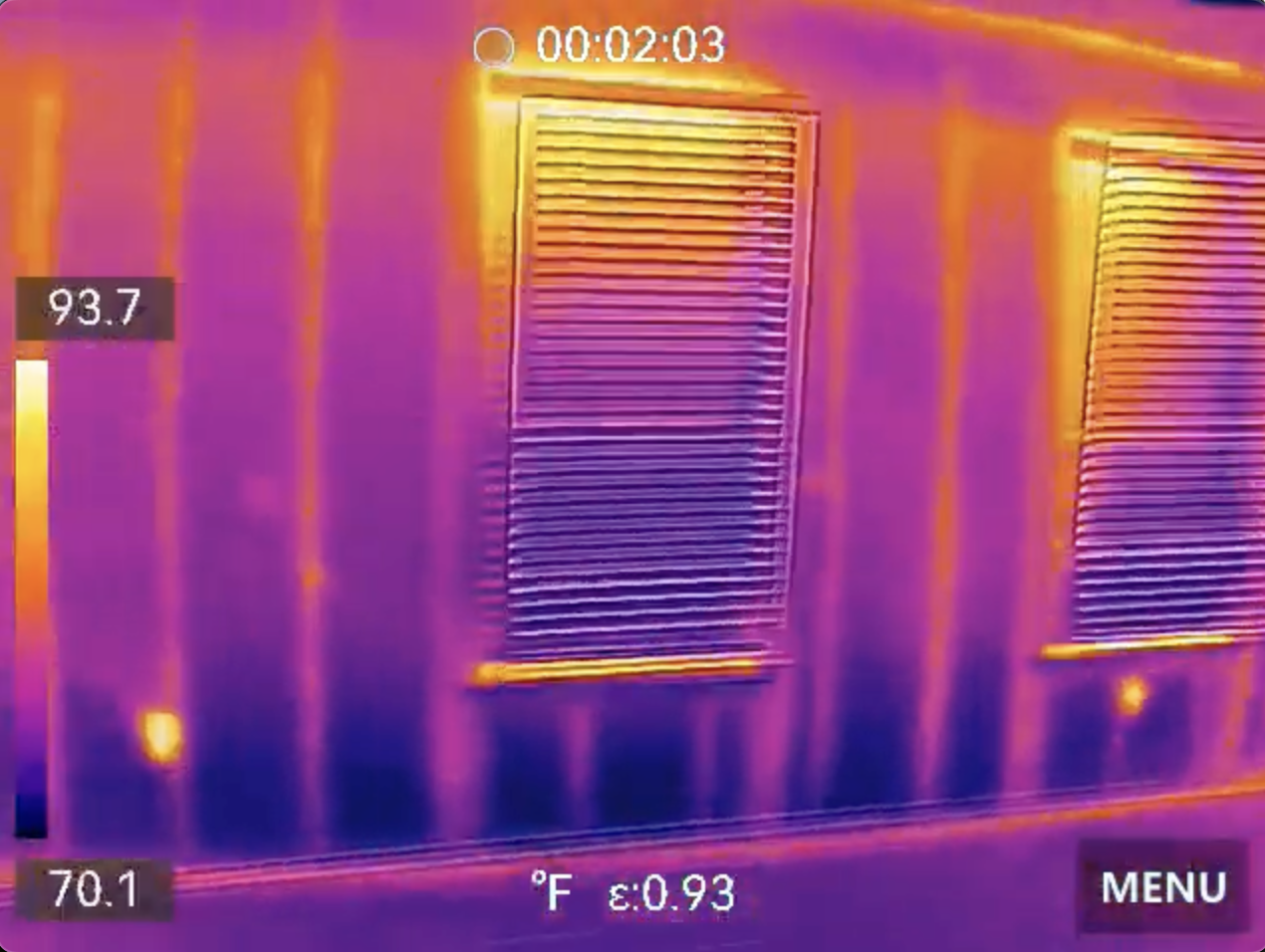
thermal bridging as seen from the inside
What is Thermal Bridging?
Thermal bridging occurs when materials with high thermal conductivity penetrate through your insulation layer, creating pathways for heat to escape your home. Think of it like water finding the path of least resistance—heat naturally flows through the most conductive materials available. In a typical wood-framed wall, the wooden studs act as thermal bridges, conducting heat far more efficiently than the insulation surrounding them.
The numbers are striking. While a high performance insulation batt can be up to R-4 per inch, wood studs only provide about R-1 per inch. In a standard 2x6 wall insulated with high performance insulation batts, you might expect an overall R-value of 20. However, according to research from Oak Ridge National Laboratory, the actual whole-wall R-value is only R-12.8 with perfect installation, and drops to R-11 with typical installation practices. That's around a 40% reduction in performance due to thermal bridging alone.
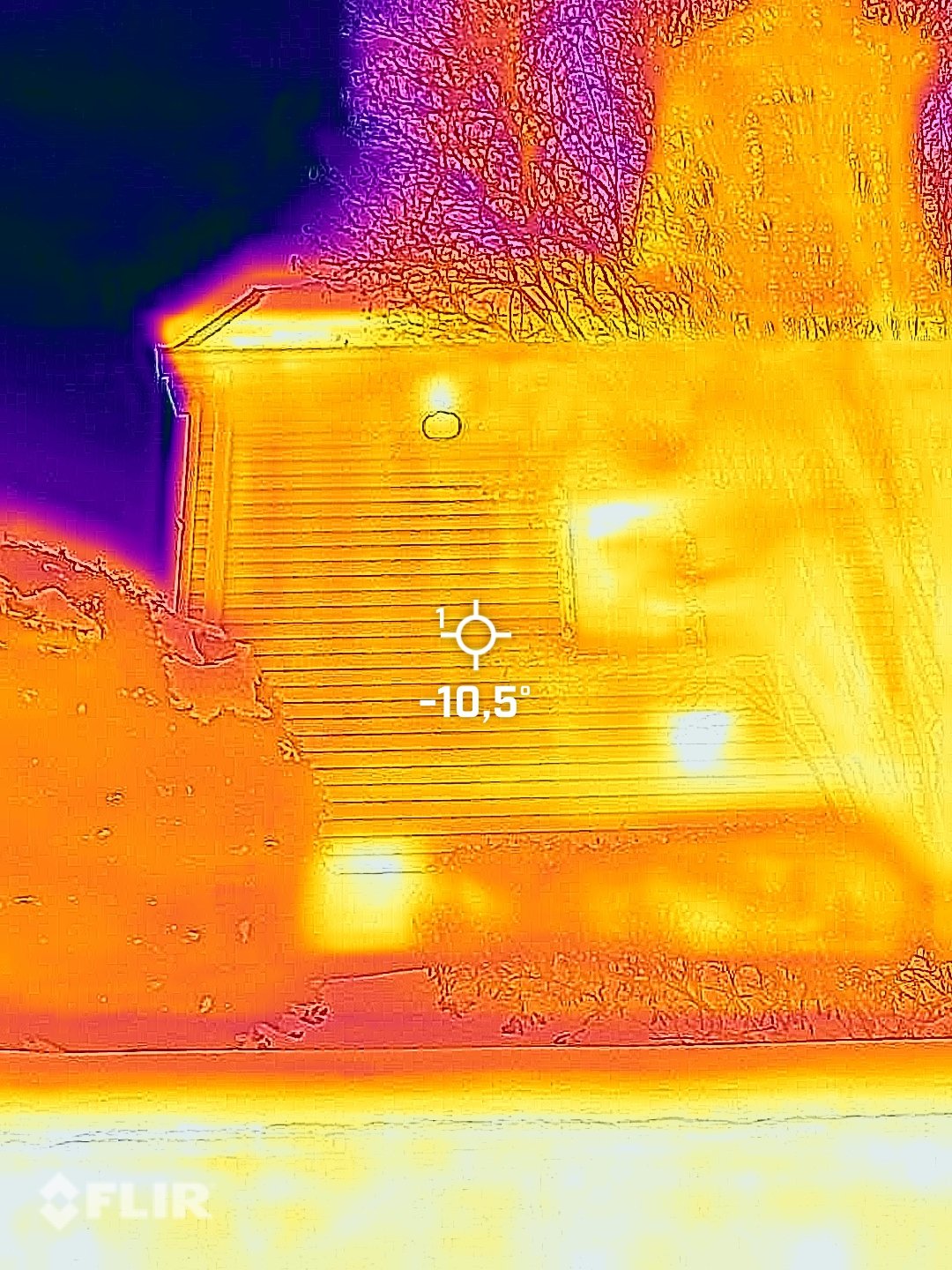
thermal bridging as seen from the outside
The Real-World Impact
Thermal bridges create more than just energy losses—they create comfort problems. These weak points in your building envelope generate cold spots on interior walls and ceilings, leading to uneven temperatures throughout your home. In winter, you might notice a persistent cold zone near an exterior wall despite your heating system running at full capacity.
More concerning is the risk of condensation and mold growth. When warm, humid indoor air meets the cold surface created by a thermal bridge, moisture condenses into liquid water. Over time, this accumulation can lead to mold growth, deteriorating air quality, and even structural damage. Recent studies suggest that thermal bridges can account for up to 30% of a building's total heat loss, making them a critical consideration in modern construction.
The Solution: Continuous Exterior Insulation
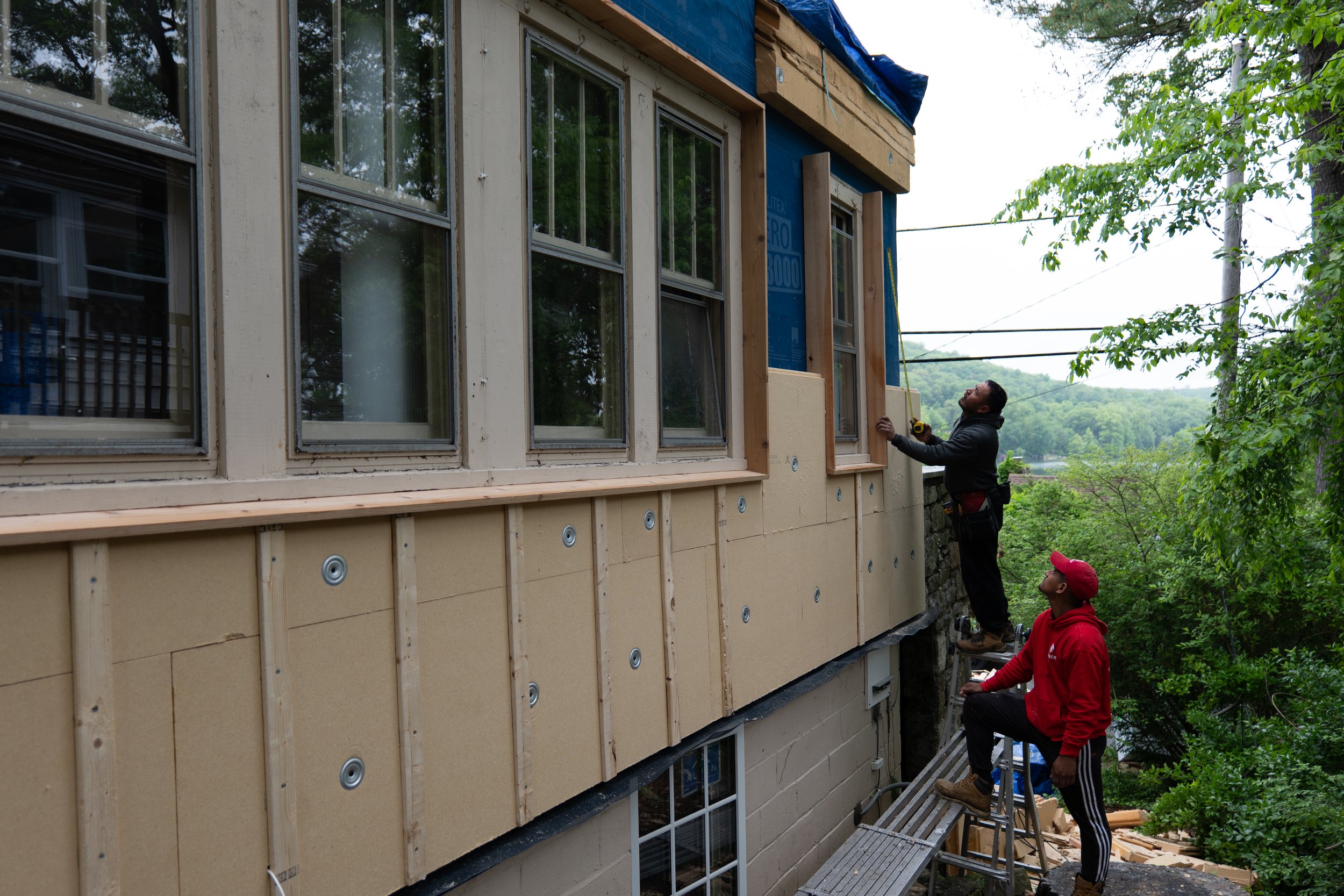
exterior insulation being installed on a 1950s house remodel
The most effective solution to eliminate thermal bridging is continuous exterior insulation. By wrapping your building with a continuous layer of rigid foam insulation on the outside, you create an unbroken thermal barrier that eliminates thermal bridging from top to bottom. This approach adds significant R-value to your entire assembly while preventing heat from escaping through structural elements.
This strategy works because it places the insulation on the exterior of the building structure, meaning the thermal mass of the walls stays warm and protected. Unlike interior insulation approaches that can create moisture problems, exterior insulation is inherently more robust and effective.
The Investment Pays for Itself
While exterior insulation requires additional upfront costs and labor, the investment pays dividends through passive energy savings that continue indefinitely. The reduced heating and cooling loads mean lower utility bills year after year. In high-performance building standards like Passive House, addressing thermal bridging is non-negotiable—these buildings use 90% less energy than code-built homes, and eliminating thermal bridges is a key factor in achieving that performance.
Beyond energy savings, you gain improved comfort, better indoor air quality, and protection against moisture-related problems. The long-term value proposition is compelling: you're not just reducing energy consumption; you're creating a healthier, more durable home.
Key Takeaways
Thermal bridging is a fundamental challenge in building science that deserves serious attention. Whether you're building new or renovating, understanding and addressing thermal bridges should be a priority. Continuous exterior insulation represents the gold standard solution, eliminating thermal bridging while adding significant R-value to your building envelope. The upfront investment in proper thermal bridge mitigation is an investment in long-term comfort, health, and energy efficiency.
---
**Sources:**
[Green Building Advisor - Thermal Bridging: How It Works](https://www.greenbuildingadvisor.com/article/thermal-bridging-how-it-works)
[Passive House School - The Science Behind Thermal Bridges and How to Avoid Them](https://passivehouseschool.com/resources/blog/science-of-thermal-bridges/)